
Do you remember the panic of fumbling for a flashlight during your last power outage? Or perhaps the frustration when the budget and engineering complexity of running an electrical wire to your backyard made you hesitate?
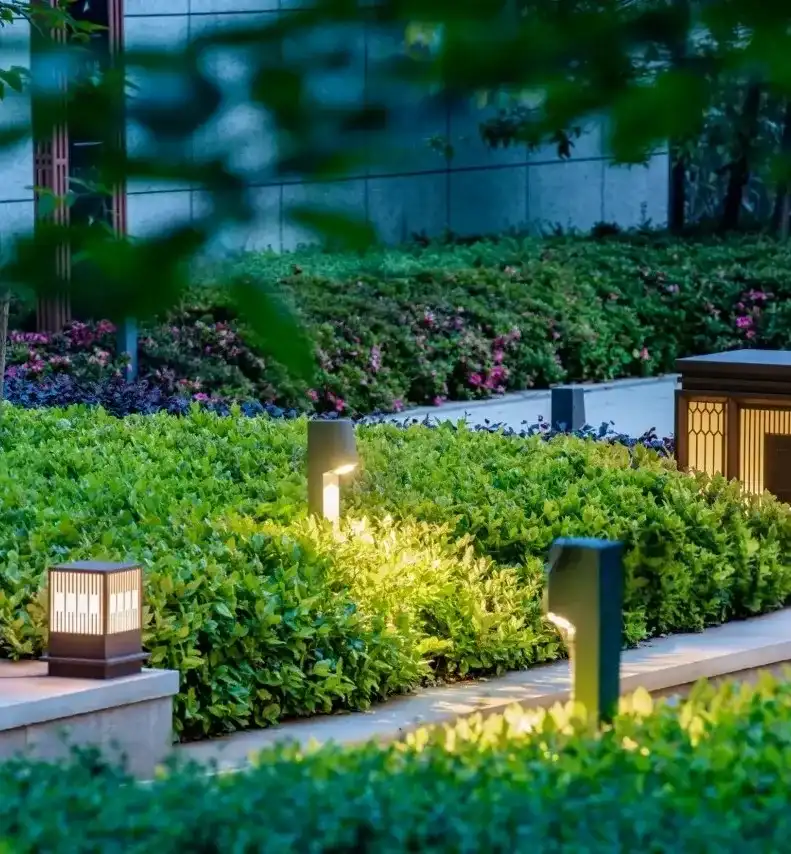
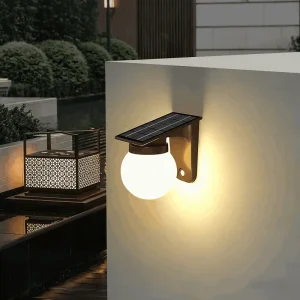
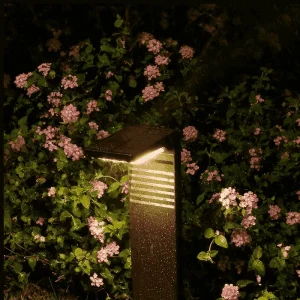
The emergence of outdoor solar lights has made these troubles a thing of the past. They stand quietly by garden paths or hang on porch walls, absorbing sunlight by day and lighting up automatically by night, appearing both simple and magical.
But have you ever wondered what technical secrets lie behind this seemingly simple “soak up the sun, then glow” process? Why do some lights stay on all night while others “get off work” early?
Today, we will push aside the marketing jargon and dive deep into the core technology of outdoor solar lights to understand how they transform free sunlight into a warm glow for your courtyard.
From Sunlight to Electricity: The Art of “Light Capturing”
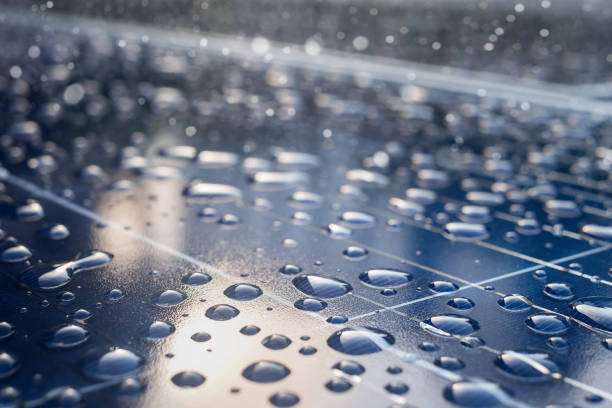
The starting point of the story is that unassuming solar panel. This isn’t just an ordinary sheet of glass; its scientific name is a “Photovoltaic (PV) Panel,” composed of small units made from semiconductor materials (usually silicon). When photons from sunlight strike these semiconductors, they stimulate the flow of electrons, generating Direct Current (DC). This process is silent, efficient, and emission-free.
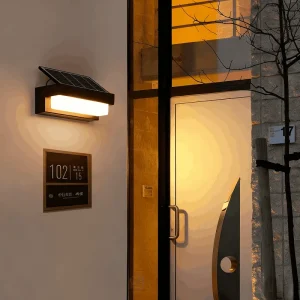
The primary factor affecting the performance of an outdoor solar light is this panel. Its efficiency determines how much energy can be harvested within limited daylight hours. Superior designs consider the angle and orientation of the panel to ensure maximum sunlight capture, even during autumn and winter when the sun’s angle is lower. You might notice that some well-engineered wall lights have panels that tilt slightly upward—this is no accident; it is designed to align with the sun’s trajectory.
The Energy “Vault”: The Mystery of Battery Storage
Sunlight isn’t available at night, so a reliable storage device is crucial. Most outdoor solar lights utilize Lithium-ion (Li-ion) or Nickel-Metal Hydride (NiMH) rechargeable batteries. During the day, electricity produced by the PV panel is stored here; at night, the battery powers the LED beads.
The battery’s capacity (measured in mAh) is like the size of a fuel tank—the larger the capacity, the more energy it stores, and the longer the illumination time.
A modern minimalist solar wall lamp might be equipped with a larger battery pack to achieve 12 to 16 hours of light, easily handling long winter nights. The battery quality is also vital, as it must withstand thousands of charge-discharge cycles and the extreme temperatures of outdoor environments.
The Brain Behind the Scenes: The Intelligent Controller
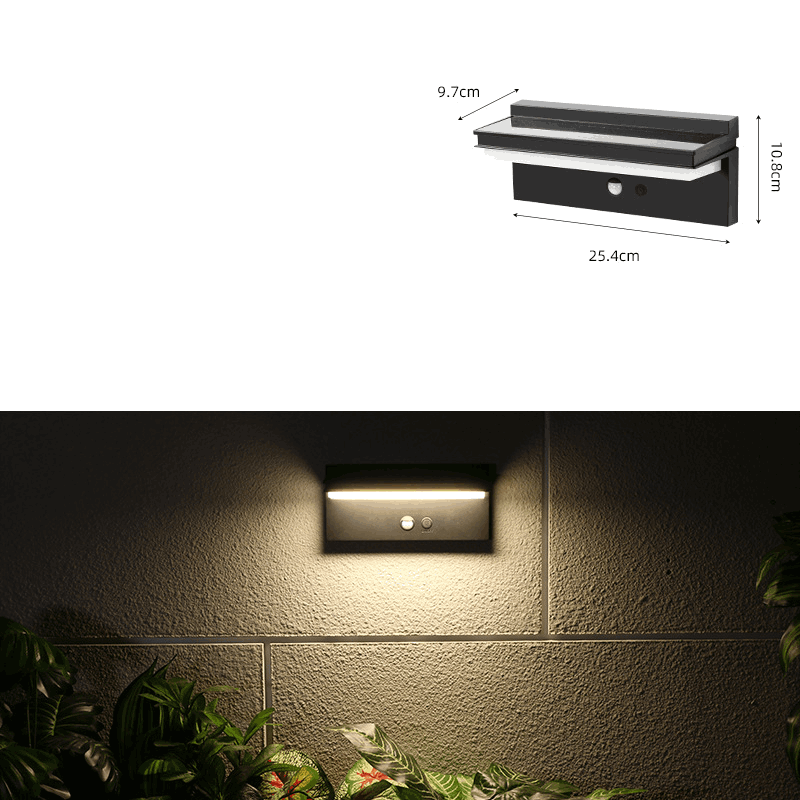
If the PV panel is the heart and the battery is the stomach, then the intelligent light control and sensing system is the brain. This tiny controller manages the entire energy flow:
- Protection: Prevents overcharging during the day.
- Automation: Automatically switches the light on at dusk.
- Conservation: Shuts down at dawn to save power.
Advanced “brains” also integrate Passive Infrared (PIR) motion sensors. This technology detects movement by sensing changes in infrared heat. Imagine coming home in the evening; as you get within 6 meters of the porch, the light automatically brightens to illuminate your steps and keyhole.
A waterproof solar wall light equipped with high-sensitivity PIR sensors provides this perfect balance between security lighting and energy saving by switching to high-brightness mode only when movement is detected.
Explore our latest high-efficiency models: [Browse Professional Grade PIR Sensor Solar Lights]
The Final Delivery of Light: LED Efficiency and Ambience
Stored energy is eventually converted into visible light via LEDs (Light Emitting Diodes). LED technology is the perfect partner for solar lighting because it is extremely efficient—using far less power than traditional incandescent bulbs to produce the same amount of light.
Comparison of Lighting Options
|
Feature |
Cool White LED |
Warm White LED |
|---|---|---|
|
Visual Effect |
Crisp, Clear, Pure |
Soft, Relaxing, Cozy |
|
Best For |
Driveways, Work Areas |
Patios, Garden Paths |
|
Atmosphere |
Security & Visibility |
Leisure & Ambiance |
A Tough Shell: Waterproofing and Durability Design
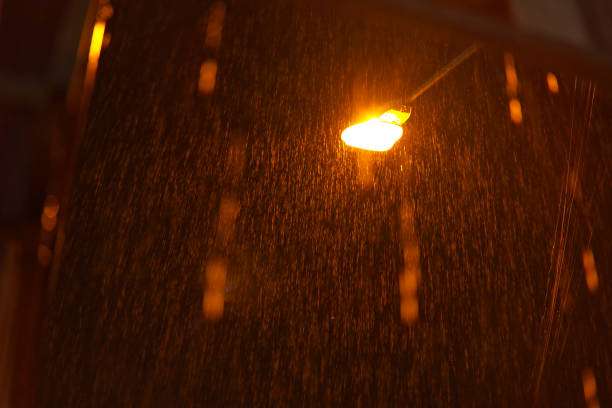
Outdoor technology must be resilient. Even the strongest PV panel will fail if moisture seeps in. Therefore, Ingress Protection (IP) ratings are the standard for durability:
- IP65 Rating: Means the device is completely dust-tight and can withstand low-pressure water jets from any direction—ideal for heavy rainstorms.
- IPX4 Rating: Protects against splashing water, sufficient for garden irrigation and light rain.
Sturdy materials and excellent sealing craftsmanship ensure these precision electronic components work stably for years under the sun, wind, and rain.
Frequently Asked Questions (FAQ)
Q: Do solar lights work in winter or on cloudy days?
A: Yes. PV panels can still collect diffuse light on cloudy days, though efficiency is lower. In winter, the key is battery capacity and charging efficiency. Choosing models with longer rated illumination times (e.g., those rated for 12-16 hours) ensures you have enough energy reserves for basic lighting throughout the night despite shorter daylight hours.
Q: Is there any special maintenance required after installation?
A: Almost none, but small efforts extend life. The main task is cleaning the solar panel surface. Dust, pollen, and bird droppings can obstruct sunlight absorption; simply wipe it gently with a damp cloth. In extreme winter storms, temporarily moving stake lights indoors can prevent them from being buried in snow or physically damaged.
Conclusion
The charm of outdoor solar lights goes far beyond the convenience of being “wire-free.” It is a sophisticated product of material science, electronic engineering, and intelligent design. Every steady glow is a result of the efficient capture, storage, and release of solar energy.
Next time you see a sleek, modern solar wall lamp, you’ll know that beneath its minimalist exterior lies a high-efficiency PV panel, a reliable battery, a smart brain, and a “strong heart” built to weather the storm. It is not just a lamp; it is a miniature smart power station bringing sustainable light to your outdoor life. Start by understanding its core, and choose a truly reliable companion to light up your every night.
Discover high-efficiency outdoor solar lights with smart PIR sensors and long-lasting batteries to brighten your garden paths safely.