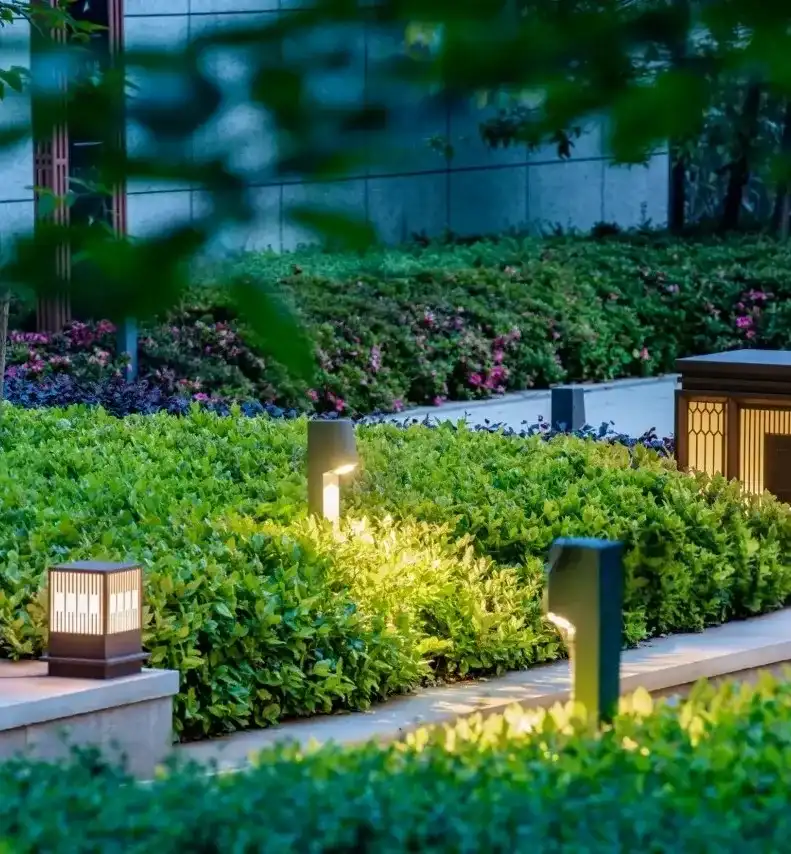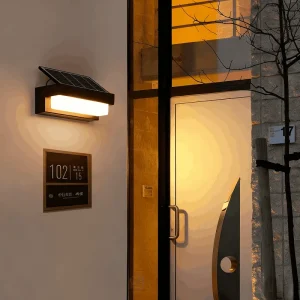
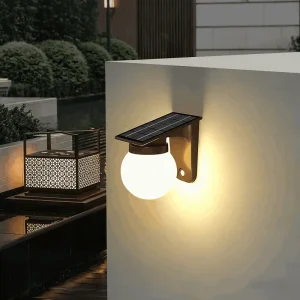
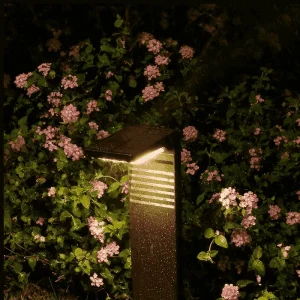

“My friend said solar lights are useless in winter.” “Online reviews say they’re too dim, only good as night lights.” “Do the batteries fail after a year or two?” If you’re considering adding solar wall lights to your porch, backyard, or garage, these doubts—coming from friends, forums, or past impressions—might be holding you back.
We understand. Any new technology or product comes with outdated information, isolated bad experiences, and general misconceptions.
For solar outdoor lighting, especially wall lights as a home’s “face,” there are persistent myths. It’s time to set the record straight with facts and modern product realities. Knowing the truth helps you judge whether this convenient, eco-friendly lighting solution is what you’ve been looking for.
Myth-Busting: Let’s Speak With Facts
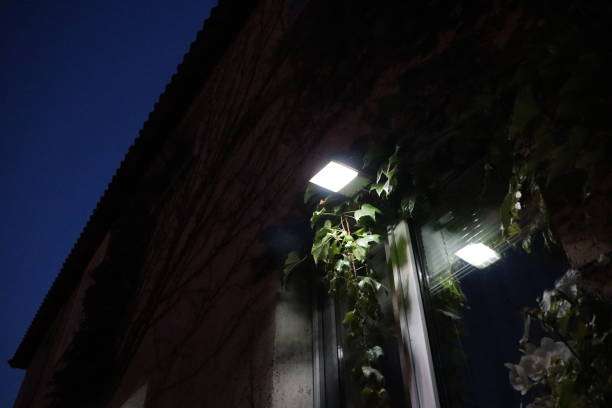
Let’s face the five most common and misleading statements and reveal the truth.
Myth 1: “Solar lights are too dim to be useful.”
Truth: Technological advances have turned “fireflies” into “reliable guardians.”
This impression may stem from early, immature solar garden lights a decade ago. Today’s solar wall lights rely on high-efficiency LEDs and optimized optics.
Modern high-quality LED chips provide significant luminous efficiency. A well-designed wall light uses reflectors and lenses to direct light exactly where needed—door numbers, keyholes, steps, or entry paths.
The goal isn’t to illuminate your yard like daylight (that would cause light pollution and feel harsh) but to provide comfortable, effective lighting. It’s not for reading a newspaper, but for safely walking to the door, recognizing visitors, or creating a warm porch glow at night; it performs better than many older wired wall lights. It provides functional light rather than “performance light.”
Myth 2: “One cloudy day, it won’t work at night.”
Truth: It relies on a “battery warehouse,” not real-time power.
People mistakenly think solar lights, like solar calculators, need light to work. Not true.
High-quality solar wall lights store energy in internal batteries during the day. At night, they draw from this stored power. How long they shine depends on the energy stored in the “battery warehouse” over previous days.
With a quality photovoltaic panel and sufficient battery, a wall light can provide a full night of illumination. Even during consecutive cloudy days, stored energy keeps it running for several nights, though brightness or duration may gradually decrease.
Myth 3: “Winter? Completely useless.”
Truth: Winter is a challenge, not a death sentence.
Shorter days and lower sun angles reduce charging efficiency, so winter performance may decline. But well-designed wall lights with efficient low-light photovoltaic panels and low-temperature batteries can still charge on sunny days.
Lighting duration may shorten (from 12 hours in summer to 6-8 hours), but this usually covers the critical evening hours. Snow reflection can even slightly increase energy capture. Winter requires realistic expectations and high-quality products—not abandonment.
Myth 4: “Short lifespan; batteries fail after a year or two.”
Truth: Core components last long; durability depends on design and craftsmanship.
- LED source: High-quality LEDs can last tens of thousands of hours—up to 10 years or more for typical nightly use.
- Battery: Only the battery naturally degrades after hundreds of charge cycles. Most batteries are replaceable (commonly 18650 lithium batteries), allowing lights to be renewed at low cost.
- Overall durability: Outdoor-rated materials and sealing matter. IP65-rated products resist water and dust, making early failure unlikely except under extreme impact.
Myth 5: “Installation is tricky; it needs perfect sun exposure.”
Truth: Installation is much easier than wired lights; optimal placement is simple, not extreme.
Compared to digging, wiring, and hiring electricians, solar wall lights are almost “foolproof.” Typically, just use a screwdriver to mount the base and hang the light—done in ~20 minutes.
Placement requires common sense: orient the solar panel toward the sunniest direction (south in the Northern Hemisphere), with minimal obstruction between 10 a.m. and 4 p.m. Partial shade is acceptable, though battery life decreases.
Some models separate the panel from the light, allowing placement in optimal sunlight while mounting the light decoratively.
Setting Realistic Expectations: What Solar Wall Lights Excel At
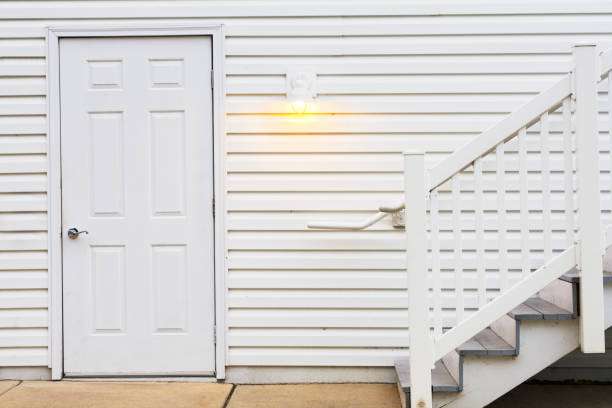
After busting myths, let’s establish a clear framework. Solar wall lights are not magic wands; they have specific strengths and ideal use cases.
Ideal for:
- Porches, above garage doors, and backyard entrances for decorative and safety lighting.
- Balcony and terrace walls for warm ambient light.
- Garden path fences or wall lighting.
- Motion-activated security lighting supplementing home safety systems.
Not suitable for:
- Illuminating a full-sized football field with high-mast lighting.
- Completely enclosed, windowless corridors.
- Providing absolutely stable performance regardless of season or weather.
Real-World Q&A (FAQ)
| Question | Answer |
|---|---|
|
Which parameters should I focus on to avoid poor products? |
|
|
My wall faces north with almost no direct sun. Is installation hopeless? |
|
Embrace a Freer Light with Clear Vision
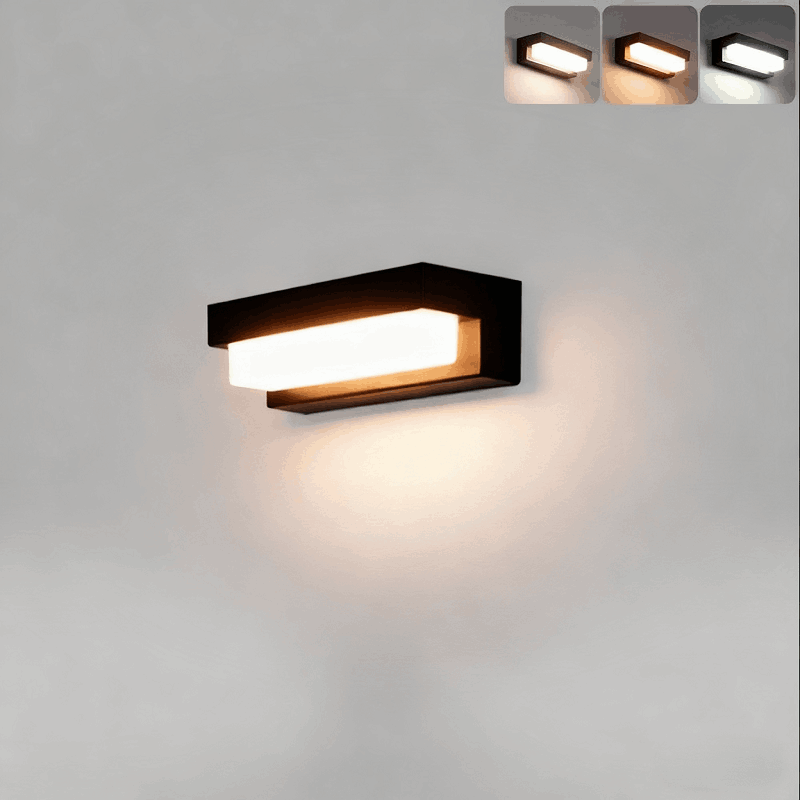
It’s time to update our perception of solar wall lights. They have evolved from novel, potentially unreliable toys into mature, practical, and attractive home lighting options.
Old myths about brightness, cloudy days, lifespan, and installation stem from past technology limitations or poor products. Today, with high-quality LEDs, efficient solar tech, and robust design, a good solar wall light becomes a reliable, beautiful, and hassle-free component of your outdoor lighting system.
Don’t let outdated information hold you back. Understand its true capabilities and reasonable limitations, then choose according to your location and needs.
Once you make an informed choice, you can enjoy the warm automatic glow at your door while making a small contribution to the environment—an experience far better than imagined.