
So, you’ve decided to brighten up your yard with some outdoor solar lights. Great choice! You’re imagining the warm glow along your garden path, the welcoming light by your front door, and the peace of mind from a well-lit property. But before you click “add to cart” on that tempting 12-pack of pathway lights, take a deep breath.
The biggest mistake people make with solar-powered lighting isn’t buying a bad product—it’s buying the right product for the wrong situation. A light that’s perfect for a sunny driveway border will utterly fail on a shaded north-facing wall. That gorgeous modern sconce might look stunning, but if its battery can’t last the night, its beauty is short-lived.
Think of this not as a shopping list, but as a planning session. Getting these five considerations right is the difference between a lighting investment that delights you for years and a box of disappointing, dim decorations. Let’s make sure you fall into the first category.
1. The Sun Audit: Your Light’s Daily Meal Ticket
This is the non-negotiable starting point. Solar-powered means just that: powered by the sun. No sun, no light. It seems obvious, but it’s the most common oversight.
Don’t just glance outside. Conduct a proper “sun audit” on your intended installation spot.
- Visit at 1 PM: Is it in direct, unfiltered sunlight?
- Check for Obstructions: Is it shaded by a tree, your house’s overhang, or a fence for part of the day?
- Seasonal Changes: Will that spot be shaded in the winter when the sun is lower?
The Rule: Your solar panel needs a minimum of 6-8 hours of direct sunlight for a full, robust charge. If your perfect aesthetic spot is in deep shade for most of the day, you have two choices: pick a different spot, or lower your expectations for brightness and runtime significantly. For areas with less-than-ideal sun, prioritizing lights with highly efficient polycrystalline solar panels (like those found in many quality wall lights) is critical to squeezing every last bit of energy from the available light.
2. The “Job Description”: What Do You Want This Light to Actually Do?
Not all outdoor solar lights are created equal because they’re designed for different tasks. You wouldn’t use a reading lamp to light up a football stadium. Define the primary purpose.
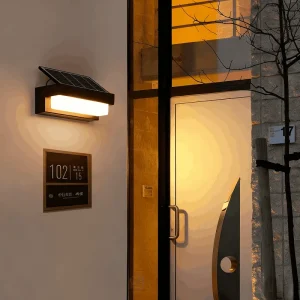
- Security & Safety: You need bright, reliable light for doorways, garage approaches, or dark corners. Here, motion-sensor lights are king. They conserve battery by only shining at full power when needed, and the sudden illumination is a proven deterrent. A product like the Waterproof LED Outdoor Solar Lights with PIR Motion Detection is built for this exact job, with a sensor that detects movement up to 6 meters away.
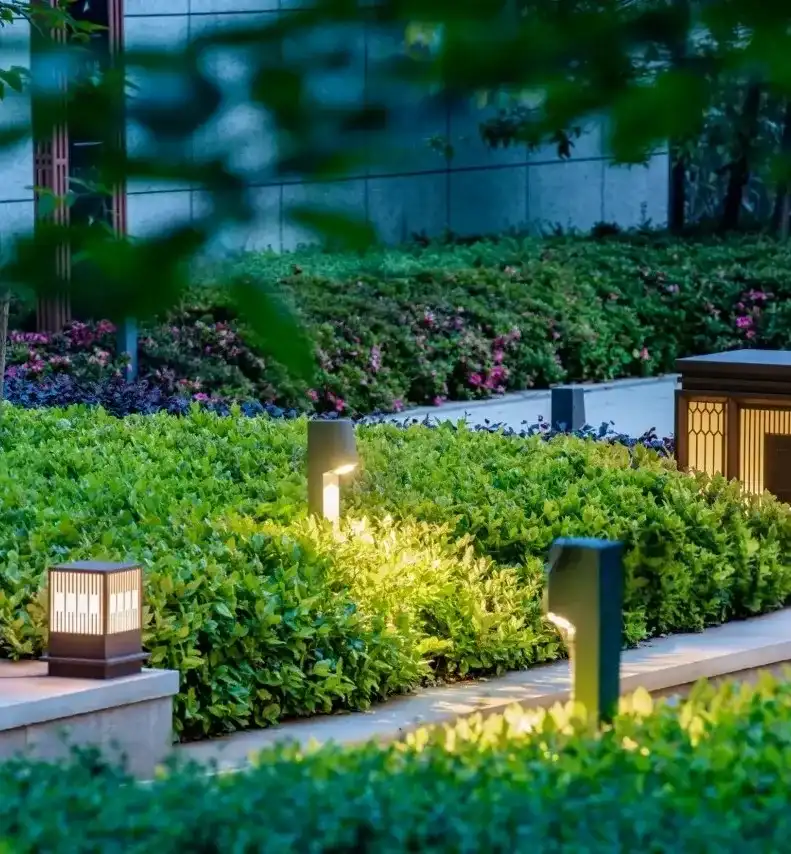
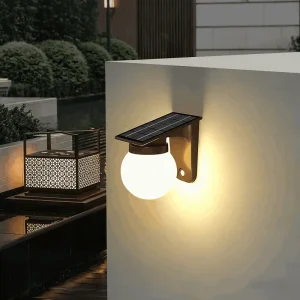
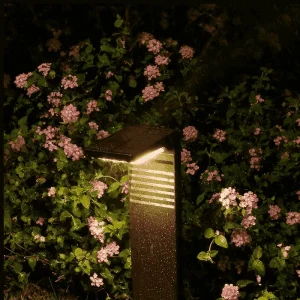
- Ambiance & Decoration: You want to create a mood, highlight landscaping, or gently illuminate a seating area. For this, look for lights with a softer, wider glow and attractive design. Pathway lights, garden stakes, and stylish wall sconces fall into this category.
- Task Lighting: Do you need to see the grill knobs, the house numbers, or the lock on your gate? You’ll need a focused, bright LED in a spot or flood pattern.
Mixing these types is how you create a professional, layered lighting scheme for your yard. A motion-sensor light provides security at the garage, a warm wall light offers ambiance on the patio, and soft pathway lights guide the way.
3. The Specs That Matter: Decoding the Details
Once you know the “where” and the “why,” you can decode the product details to find a perfect match.
- Waterproof Rating (IP Code): This is your guarantee of durability. For any permanent outdoor solar light, do not compromise. IP65 is the gold standard for mounted fixtures—it means completely dust-tight and protected against low-pressure water jets from any direction. For garden stakes, IPX4 (protection from splashing water) is a good minimum. This ensures your lights can handle rain, snow, and sprinklers.
- Lighting Time: This is the estimated burn time on a full charge. Vague promises are red flags. Look for a stated range (e.g., 6-12 hours, 12-16 hours). Remember, you’ll likely experience the lower end of the range in less-than-perfect conditions, so plan accordingly.
- Light Quality: Consider the LED color temperature. Warm White (2700K-3000K) creates a cozy, inviting, traditional glow. Cool White (5000K-6500K) is brighter and more clinical, often better for security. Some advanced lights offer both, letting you choose the mood.
4. The Design & Aesthetics Factor: It Has to Live on Your House
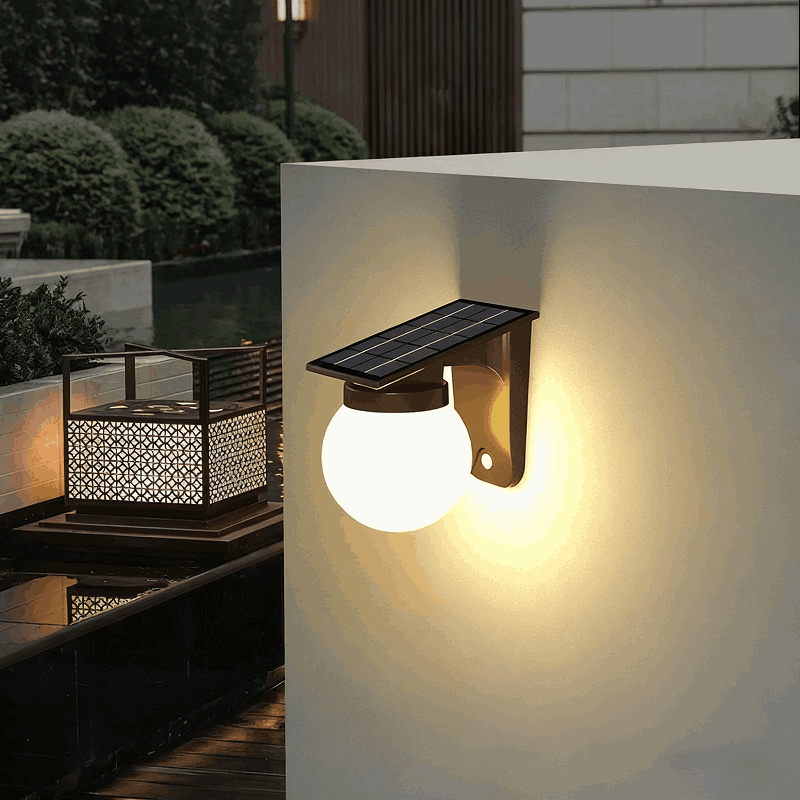
Performance is useless if you hate how it looks. Your outdoor solar lights are part of your home’s exterior decor.
- Finish & Style: Does the black matte finish complement your modern home? Would a bronze finish better suit a traditional facade? Choose a style that enhances, rather than clashes with, your architecture.
- Scale: A tiny light will look lost on a large, blank wall. A huge lantern might overwhelm a cozy cottage entrance.
- Light Output Pattern: Is it a downward-facing light to illuminate a path? An upward-facing light to wash a wall? A 360-degree glow? Make sure the light pattern serves your intended “job description.”
5. The Installation Reality: How Much Work Are You Willing to Do?
One of the biggest sells of outdoor solar lights is easy installation. But “easy” varies.
- Stake Lights: The simplest. Just push them into soft ground. Ensure the soil is suitable, and think about winter—will you pull them up?
- Wall-Mounted Lights: These usually require drilling a couple of holes and screwing in a bracket. You’ll need a basic drill and the willingness to make small holes in your siding or wall.
- Hardwired vs. Solar: This is the core advantage. Solar-powered means no electrician, no wiring, and no permits. You have complete freedom to place and move lights. This ease is transformative for DIYers.
FAQ: Your Pre-Purchase Questions, Answered
Q: I live in a cloudy area. Are solar lights pointless for me?
A: Not pointless, but you need to be strategic. Prioritize lights with large, efficient solar panels and bigger batteries. Expect shorter runtimes in winter and during prolonged cloudy periods. Focus placement on the sunniest spots you have, even if they aren’t the “perfect” aesthetic locations.
Q: How long do the batteries inside last, and can I replace them?
A: The rechargeable batteries in quality lights typically last 2-4 years. A key feature to look for is a user-accessible battery compartment (often secured with a small screw). This lets you easily swap in a new standard battery (like an 18650 lithium-ion) for another few years of service, greatly extending the life of your light.
Q: Can I use outdoor solar lights in a completely shaded area if I use a remote solar panel?
A: Yes, but this is a specific type of product. Some solar lighting systems have a panel connected by a long cable (10-20 feet), allowing you to place the panel in the sun while the light fixture sits in shade. These are less common for standard residential products but are a fantastic solution for challenging spots.
Your Confident Next Step
By walking through these five considerations—Sun, Job, Specs, Design, and Installation—you’ve done the homework most people skip. You’re no longer just buying a light; you’re executing a plan.
If your plan calls for a reliable, hands-free security solution for a key entry point, your search should focus on lights engineered for that specific task. The Waterproof LED Outdoor Solar Lights with PIR Motion Detection exemplifies this focus. It combines a high-efficiency solar panel for dependable charging, a sensitive PIR sensor for smart activation, and a robust IP65 waterproof rating for all-weather endurance, making it suitable for the walls of gardens, garages, and courtyards. It’s a tool designed to perform a specific job brilliantly.
Armed with this knowledge, you can shop with confidence. You’ll see past the glossy photos and recognize the products that are truly built to solve your lighting challenges, transforming your house and yard into a beautifully, intelligently lit haven after dark.
Explore our motion-sensing solar wall light, built for security with automatic detection and waterproof durability.